Why does early-stage VC sourcing burn so much analyst time?
Lean fund teams operate across at least six disconnected tools, and the friction between those tools eats the time that should be spent on judgment. Sourcing coverage caps at human bandwidth, decisions are slow, and institutional knowledge evaporates between team members.
Early-stage venture capital firms operate across a patchwork: deal sourcing in spreadsheets and bookmarked portfolio pages, company research across dozens of browser tabs, investment theses written from scratch in Word, founder outreach managed through individual email threads. Nothing connects. Each component is a separate context-switch and a separate place where information goes to die.
For a small fund team, this fragmentation creates compounding problems. Sourcing coverage is limited by what one or two analysts can manually monitor; most lean funds track 20 to 30 firms by hand and miss everything else. The research-to-decision cycle is slow, with 4 to 8 hours of manual web research per company before a thesis can even be drafted. And institutional knowledge is lost between team members because it lives in individual files rather than a shared, searchable system.
Off-the-shelf VC CRMs do not close the gap. Affinity and 4Degrees are excellent at relationship intelligence but lack native AI document extraction or automated research generation. Attio is highly flexible but generic, requiring substantial engineering to replicate VC workflows. Carta and Visible solve post-investment fund accounting and portfolio monitoring respectively but were never designed for top-of-funnel deal flow. The result is that lean teams stitch together five or six tools and accept the manual work in between.
The opportunity is to collapse that stack into one workflow with an AI-native orchestration layer doing the manual research, drafting the thesis, queuing the outreach, and refusing to send anything until a human signs off.
Our approach: many specialized AI helpers, not one big chatbot
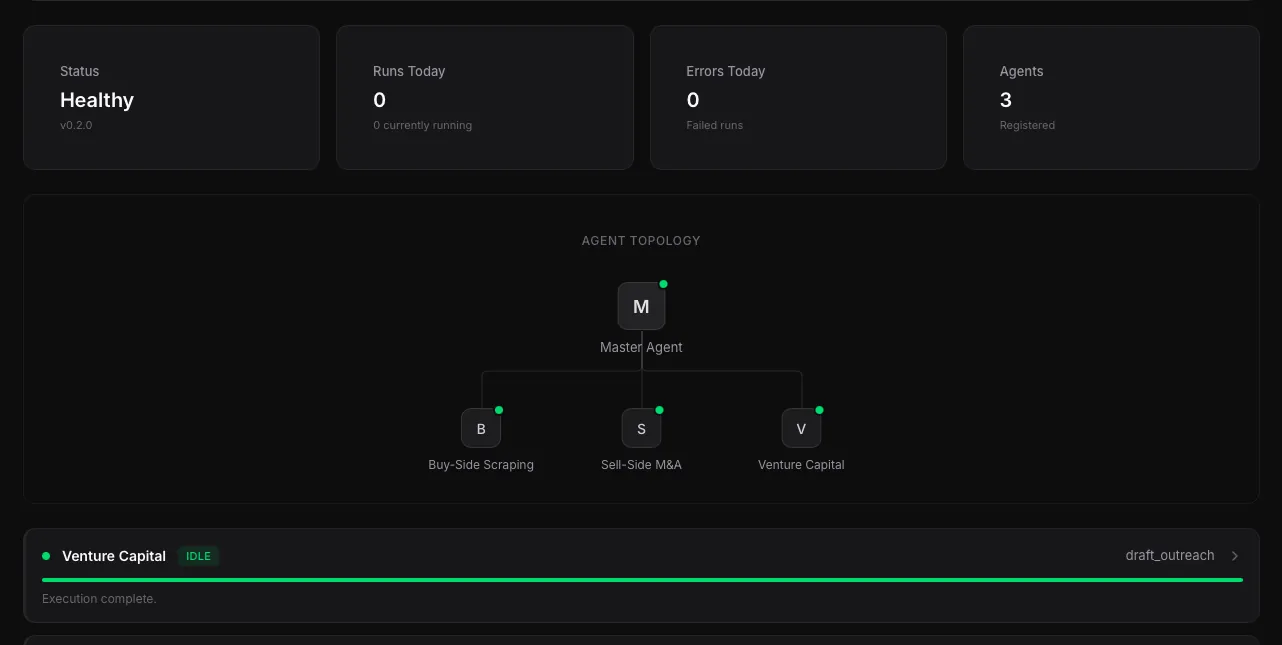
A single AI with a long prompt cannot do this job well. Instead, the platform uses several focused AI helpers, each one expert at a specific task, coordinated by a manager that hands work between them and writes everything down to a shared record.
Specialists beat generalists for research-heavy work. An AI helper that only knows how to find new companies on VC firm portfolio pages is more reliable than a generalist told to "go do research." A research helper armed with 27 focused tools (each one good at finding a specific kind of information) is faster and more accurate than one helper with all those tools mashed together. A thesis-writing helper with a fixed 11-section template produces consistent output that fund partners can compare across companies, where a generalist would drift in tone and structure from one report to the next.
A human approves every email before it can be sent. The system drafts emails but cannot send them. A human has to click "approve" on every single email before it leaves the system, and that approval gate is built into the code itself, not just a setting that could be turned off. Even if an AI helper "decided" to send something on its own, it could not, because the check happens after the AI has finished thinking, not inside the AI's prompt where instructions can be overridden.
Honest about what the system does not do. The theses produced by the platform are about 70 to 75 percent as deep as what a junior analyst would write manually, and they take 5 to 7 minutes instead of 4 to 8 hours. The remaining 25 to 30 percent comes from partner judgment, fund-specific context, and conversations the platform cannot have. The system makes the analyst faster on the parts that scale. It does not replace the analyst on the parts that do not.
The 70 to 75 percent figure is also a deliberate cost trade-off, not a hard ceiling. The system runs on a mix of mid-tier and lightweight AI models to keep cost per thesis at $0.50 to $0.70. Upgrading to a frontier model for the thesis-writing step would push depth substantially higher, at roughly four to five times the cost per thesis. For most funds, the current 1:300 cost-versus-analyst-time ratio is the better deal. For funds with stricter precision requirements, the same architecture supports a frontier-model configuration; the choice is operational, not a system limitation.
For the model-choice decisions that keep this system affordable to run, see our guide to how to choose the right AI model for your business, and our transparent breakdown of what custom AI costs.
Inside the platform
Five components feed into each other in a loop: portfolio scans surface companies, the research engine evaluates them, the thesis generator synthesizes the research into a structured document, the outreach manager queues founder emails for human review, and the pipeline dashboard shows every step of the operational record. Every action is logged.
Portfolio Intelligence Scanner
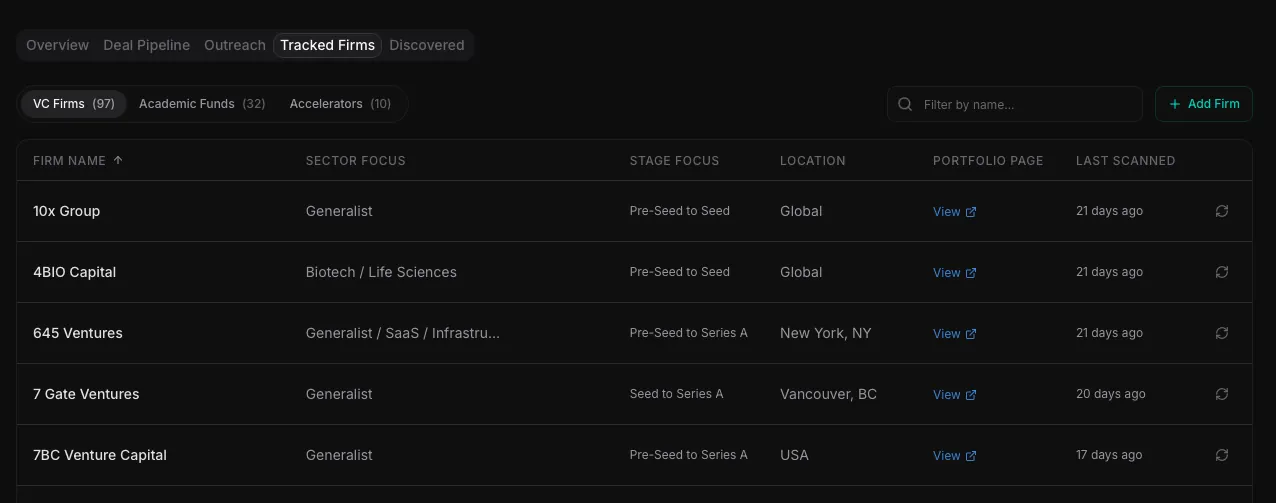
The Scanner monitors 138 tracked firms (a mix of venture funds, accelerators, and academic seed programs) on a configurable cadence. For each firm, it crawls the portfolio page, identifies new entries against the previous run, and stages them as candidate companies. It has surfaced over 800 portfolio companies through this pattern, including stealth-mode and recently-launched startups that traditional databases miss.
The Scanner uses Crawl4AI for structured extraction with an LLM fallback for non-standard layouts. Portfolio pages vary widely (some are clean tables, others are loose card grids with embedded links, others are fully image-based), so the Scanner runs structural HTML parsing first and only escalates to a model when structure fails.
Automated Research Engine with 27 specialized tools
When the analyst picks a company to evaluate, the Research Engine kicks off 27 focused research tools across four phases: gathering raw data (the company's website, LinkedIn, GitHub, AngelList, Crunchbase, news aggregators), looking at industry-specific traction signals, sizing the market, and mapping the competitive landscape. Most of the tools run at the same time, so what would take an analyst 4 to 8 hours of manual web research wraps up in 5 to 7 minutes.
The system uses different evaluation criteria for different industries. A biotech startup is not evaluated on monthly recurring revenue. A SaaS startup is not evaluated on FDA approval timelines. The Research Engine picks the right toolset based on the company's industry, classified up front against a 27-industry list with about 500 alias mappings to handle ambiguous cases like "healthcare IT" or "industrial AI."
After the research is done, a separate fact-checking helper reads the assembled report, finds every number and every name, and re-checks each one against the source it came from. Anything that does not line up is flagged with a yellow callout the analyst sees before they read the thesis. Every thesis produced by the platform passes through this fact-check, which is what supports the 100% fact-check rate metric below.
Investment Thesis Generator
Once the Research Engine has produced a verified brief, the Thesis Generator synthesizes it into an 11-section investment thesis: company overview, market opportunity, product, team, traction, business model, competitive landscape, risk assessment, valuation framework, recommended check size, and open questions for diligence. The structure is fixed (matching the institutional templates fund partners read every day) so that two theses on different companies are directly comparable.
The Generator runs on a Claude Sonnet-class model for the drafting itself, with intermediate Haiku-class calls for compression and section-specific synthesis. Average API cost is $0.50 to $0.70 per thesis at current Anthropic and Gemini pricing. The same write-up performed manually by an analyst at standard fund cost rates runs roughly $200, so the platform's cost ratio against analyst time is on the order of 1:300.
Outreach Manager with a hard approval gate
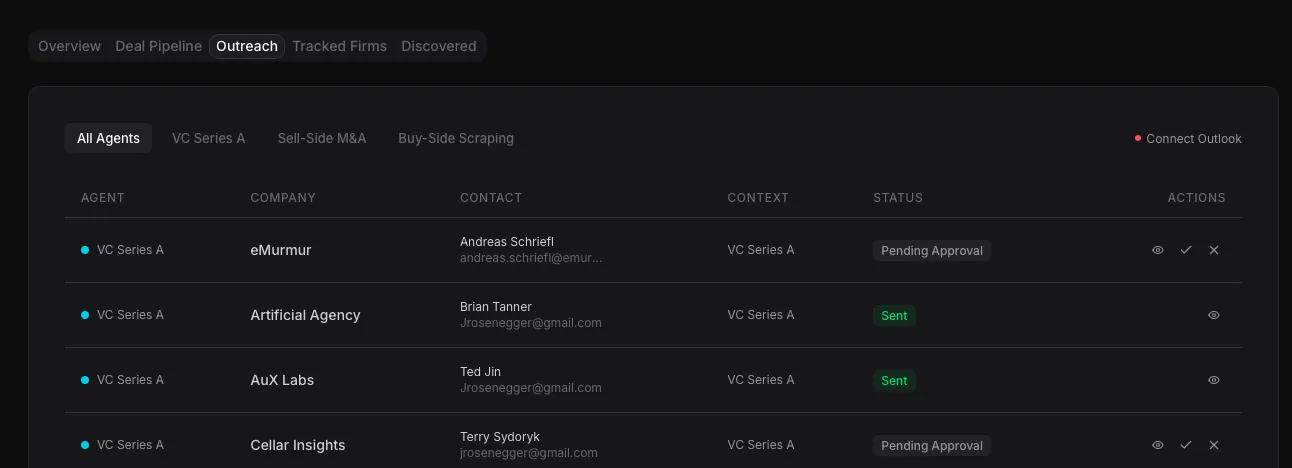
Once the analyst signs off on a thesis, the Outreach Manager drafts founder emails using the firm's voice template, fund context, and the specific points the analyst wanted to highlight. The drafts go straight to a queue. They do not send.
A human has to click "approve" on every single email before it goes out. The dashboard shows the queue, an analyst reviews each draft, edits it, and approves it; only then does the system release the message to the email server. This is the most important architectural decision in the platform. A misbehaving AI helper, a malicious prompt injection, or a hallucinated instruction cannot send an email, because the approval check happens after the AI has finished thinking. The gate lives in the surrounding code, not inside the AI's prompt where it could be talked around.
For funds with stricter compliance needs, the gate can be doubled into a two-person review. The pattern stays the same: nothing leaves the system without an explicit, logged human action.
Pipeline Dashboard and shared memory
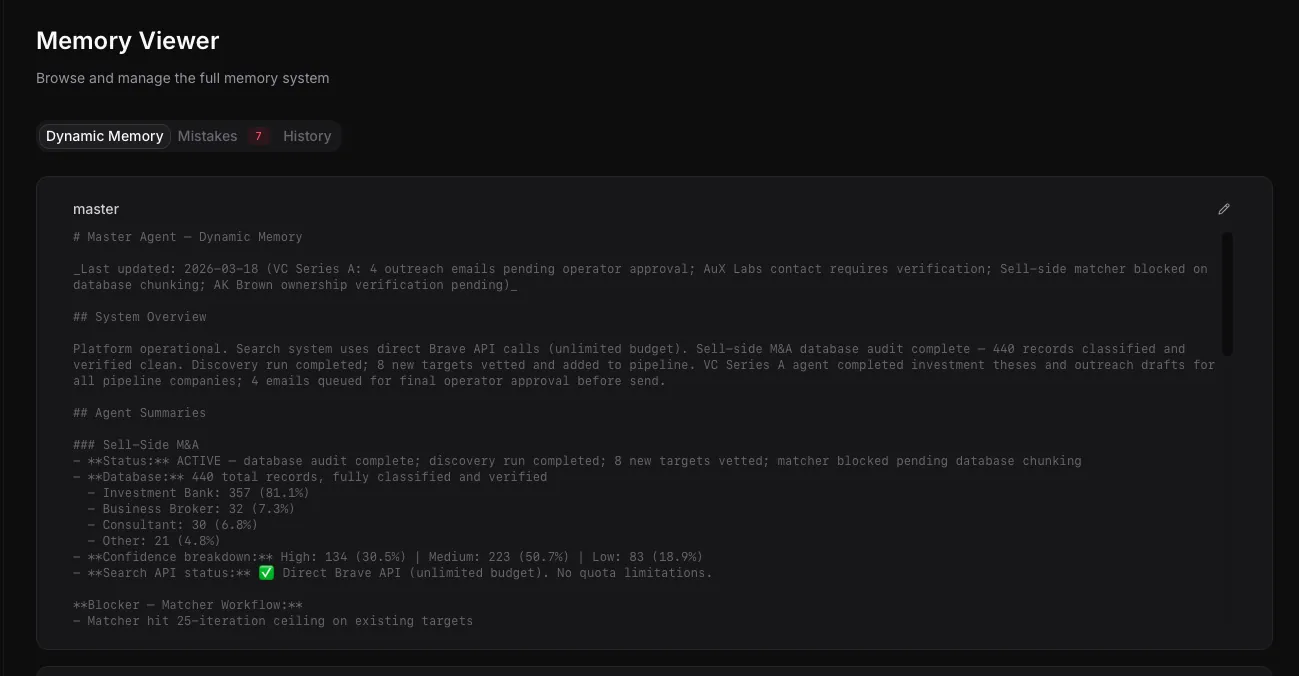
Every part of the platform writes to a shared record. Portfolio scans add new companies. Research runs attach reports. Theses are saved with version history. Outreach actions are logged with the analyst who approved them and the time the email left. The Pipeline Dashboard pulls all of this together into a single view: companies being evaluated, theses waiting for review, emails in the queue, replies in inbox, deals advancing into diligence.
This shared memory is what makes the system institutional rather than personal. A new analyst joining the fund inherits everything that has been done. The AI helpers themselves use the same record as memory: when the Research Engine evaluates a new company, it can reference earlier evaluations of competitors or co-investors. The Outreach Manager can see whether the fund has reached the same founder before through a different deal.
What did this enable?
Sourcing coverage scaled from 20 to 30 firms tracked manually to 138 monitored automatically. Time per thesis dropped from 4 to 8 hours of analyst work to 5 to 7 minutes of platform runtime. Cost per thesis dropped from approximately $200 of analyst time to $0.50 to $0.70 of API spend.
138
VC firms monitored automatically, up from 20-30 manual
800+
Portfolio companies discovered through automated scanning
5-7 min
Time to produce investment thesis, down from 4-8 hours
$0.60
Average API cost per thesis vs. ~$200 in analyst time
6
Disconnected tools consolidated into one platform
100%
Fact-check rate on every generated thesis
Beyond the numbers, the qualitative shift is in what analysts spend time on. Sourcing scans run overnight; the morning queue is a list of new companies already evaluated. Theses arrive as drafts the analyst edits rather than blank pages they author. Outreach happens at fund pace rather than analyst pace, with no email leaving the system without a logged approval. The fund has not added headcount; it has multiplied the leverage on the headcount it already has.
Could this work for your business?
The pattern is research-heavy decision processes plus structured outreach plus a pipeline that needs an audit trail. If your team produces written assessments of external entities (companies, candidates, properties, claims), and those assessments drive outbound communication that has to be reviewed before it goes, this architecture maps directly.
It applies to insurance brokerages running automated underwriting research with broker-approved client outreach. It applies to executive search firms producing candidate profiles and managing partner-approved outreach sequences. It applies to marketing agencies generating client briefs and account-manager-approved outreach. It applies to corporate development teams running M&A target evaluation. It applies to government grant programs producing applicant assessments before award decisions.
What changes per industry is what the agents are specialized for, what the structured document template looks like, and what the approval gate's compliance posture demands. The shape stays the same: master agent, specialized sub-agents, persistent operational store, code-level approval before any outbound action.
Tech stack
Backend
Agent orchestration
Web crawling & data extraction
Document generation
Frontend
Frequently asked questions
How long does a VC deal platform implementation take?
A typical buildout is eight to twelve weeks. That covers connector configuration for the firms you want to monitor, sector-specific research tooling tuned to your investment thesis, customization of the thesis document template, integration with your existing email and calendar, and the human-in-the-loop approval queue rules that match your fund's compliance posture.
How does the platform enforce human approval before sending an email?
Approval is enforced at the code level, not in an AI prompt. Outbound emails are written to a queue and the email-sending function is wired to refuse anything without an explicit approval flag set by a human action in the dashboard. Even a misbehaving agent cannot send a message because the approval check sits before the SMTP call, not inside the agent's reasoning.
How does the thesis quality compare to a human analyst?
Theses generated by the platform consistently produce 70 to 75 percent of the depth and quality of a junior analyst's manual write-up, in 5 to 7 minutes instead of 4 to 8 hours. The remaining 25 to 30 percent comes from partner judgment, fund-specific context, and conversations the platform cannot have. The system is designed to make the analyst faster, not to replace the analyst.
What does a single thesis cost to generate?
Average API cost is $0.50 to $0.70 per thesis at current Anthropic and Gemini pricing, against approximately $200 of analyst time at standard fund cost rates. The platform uses tiered model routing: cheap models handle classification and parsing, mid-tier models handle research synthesis, and the top-tier model handles thesis drafting and fact-checking. See our guide to AI costs for the full breakdown.
Can this platform work for non-VC research-heavy workflows?
Yes. The architecture is general: a master agent coordinates specialized sub-agents that run parallel research, synthesize results, and produce structured documents. The same shape applies to insurance underwriting, M&A target sourcing, executive search, and any business with research-heavy decision processes and structured outreach workflows.
Related case studies
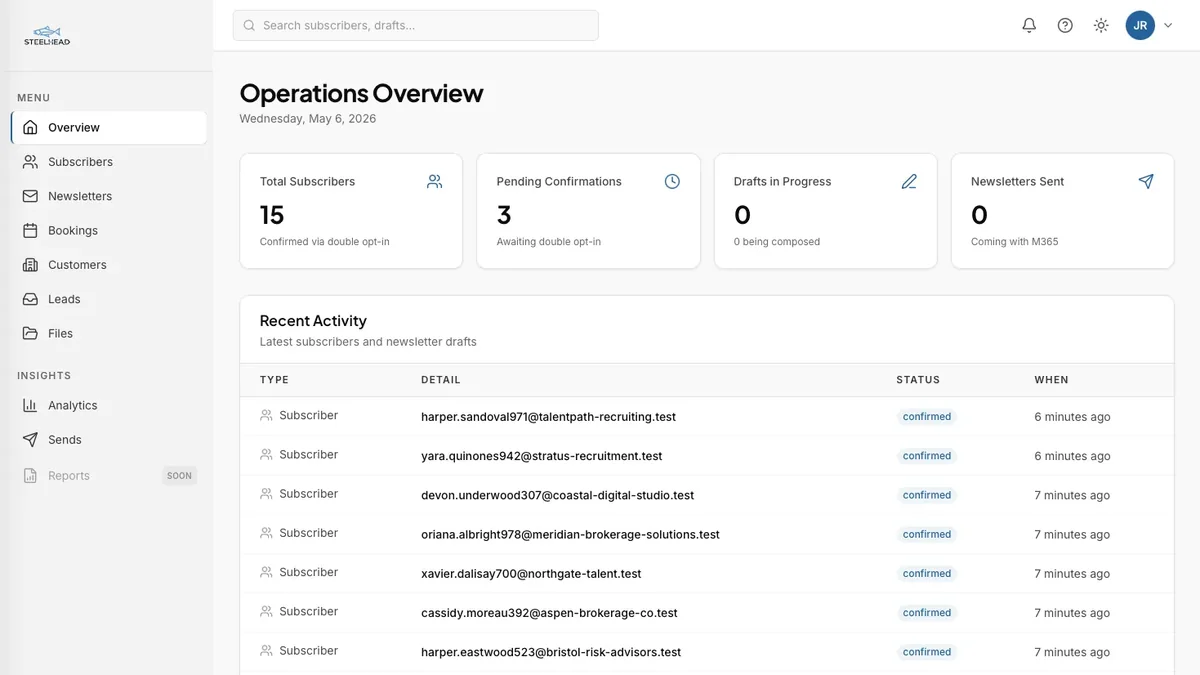
Internal Tooling
One platform replaced seven subscriptions
A solo-operator platform that unifies lead capture, scheduling, customer records, files, and analytics into one integrated system, with every workflow connected through a single customer record.
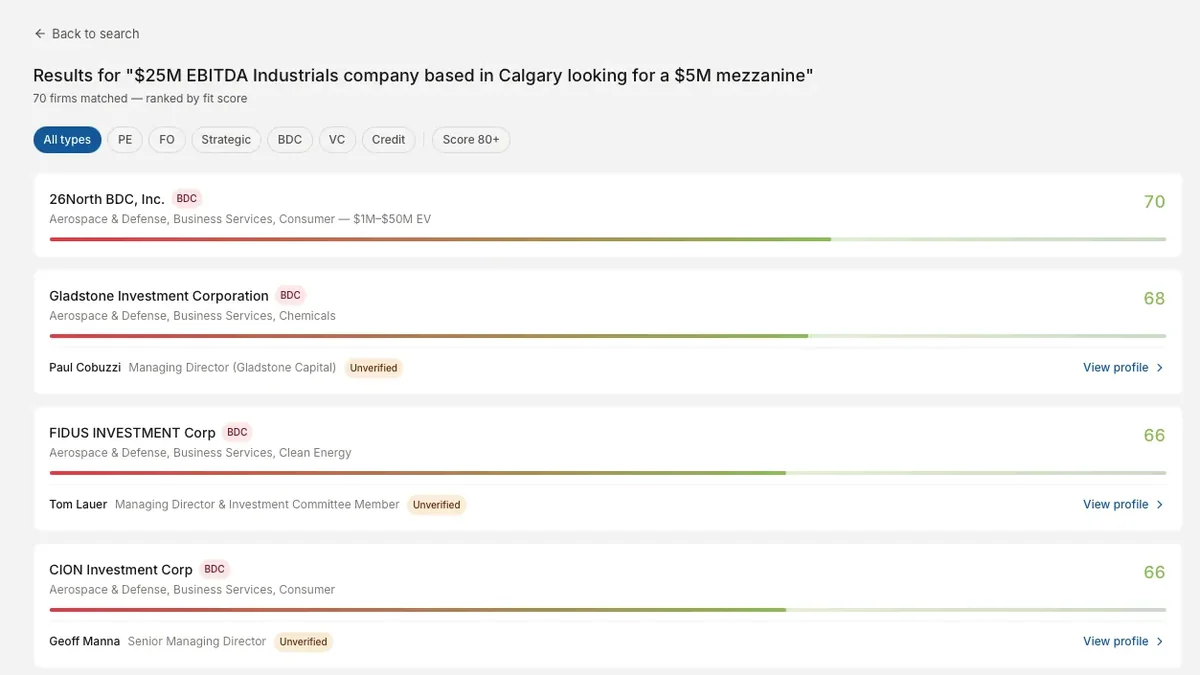
M&A Advisory
Automated Buy-Side Intelligence for M&A Deal Sourcing
A 27-stage pipeline that resolves 8,000+ raw entities into 3,190 deduplicated buy-side firms scored against deal parameters.
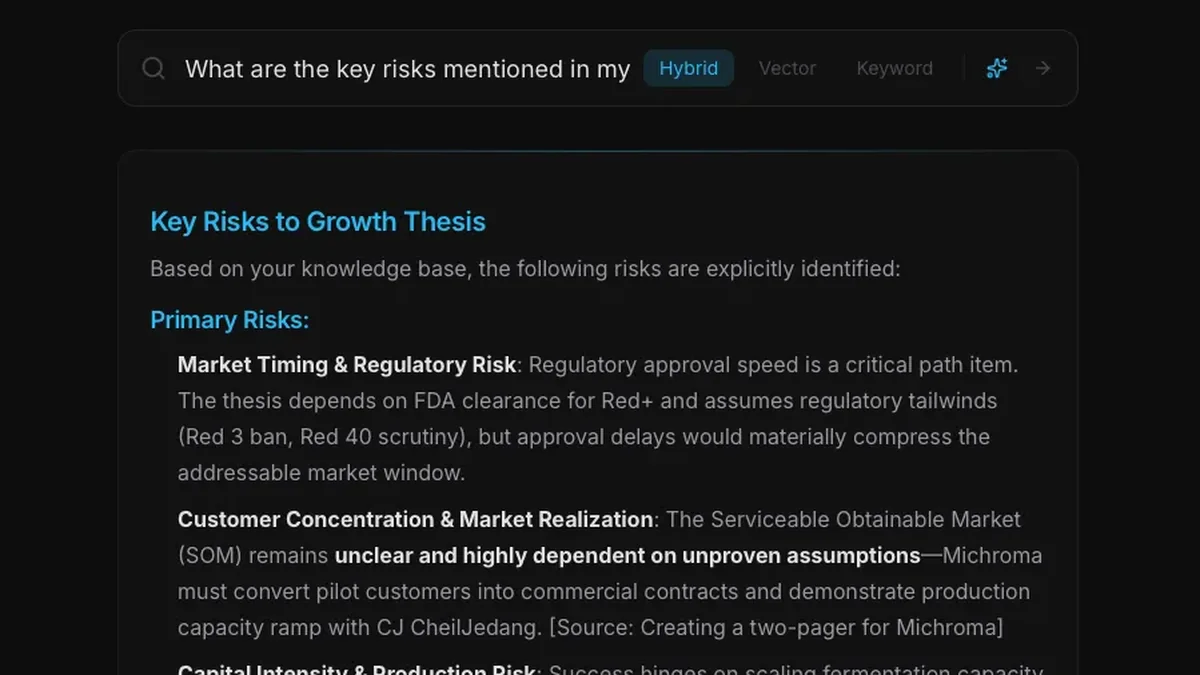
Internal Tooling
Building a Private Knowledge Graph That Actually Answers Questions
A local-first memory system that ingests 1,400+ documents and answers questions with citations in under a second.